

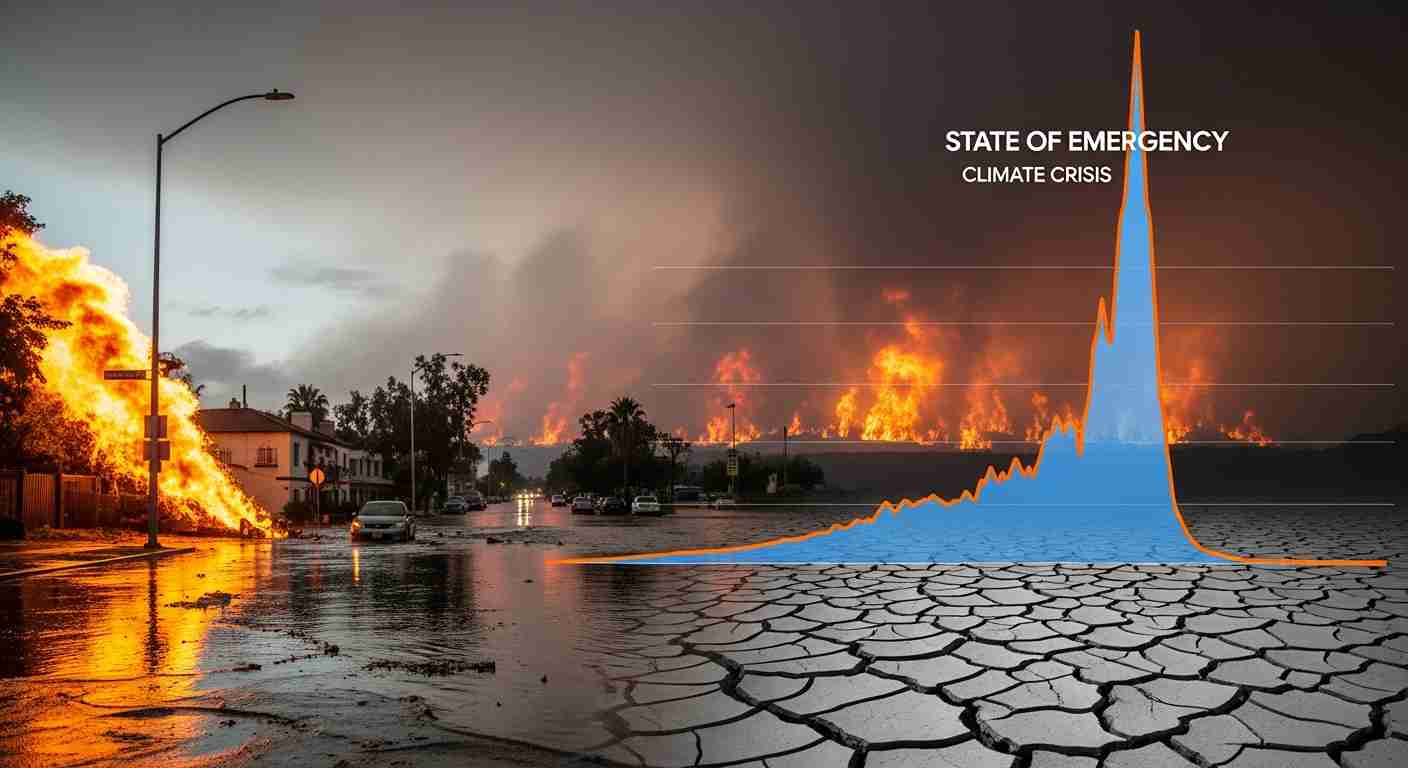
The term "state of emergency" has become an increasingly common fixture in our news cycles, often appearing alongside reports of extreme weather events. While historically associated with wars or civil unrest, its contemporary usage is overwhelmingly linked to natural disasters, many of which are exacerbated by a changing climate. In the United States, and particularly in a state like California, these declarations are no longer rare occurrences but rather regular responses to an escalating environmental crisis. But what do these declarations truly signify, and how can tools like Google Trends help us understand the public's perception and concern regarding these critical moments?
Introduction: When Climate Becomes an Emergency
Our planet is experiencing unprecedented shifts, leading to more frequent and intense weather phenomena. From devastating wildfires scorching the West Coast to relentless floods inundating communities in the South and East, the impacts of climate change are undeniable and increasingly disruptive. When these events surpass the capacity of local governments to respond effectively, a "state of emergency" is often declared. This isn't merely a bureaucratic formality; it's a critical mechanism designed to mobilize resources, accelerate aid, and protect lives.
Understanding the Escalating Crises
For many, the concept of a "climate emergency" might still feel abstract, yet its manifestations are profoundly real. Communities are grappling with unprecedented challenges, from managing scarce water resources during prolonged droughts to rebuilding after catastrophic storms. These events highlight a stark reality: our climate is pushing systems, both natural and societal, to their limits. Understanding the frequency and nature of emergency declarations tied to climate is crucial for grasping the true scale of this challenge.
What Exactly is a "State of Emergency"?
At its core, a state of emergency is a governmental declaration issued in response to a crisis, allowing authorities to temporarily suspend normal functions, laws, or procedures to address an urgent situation. These declarations can be made at local, state, or federal levels, each unlocking different tiers of resources and powers.
Legal Framework and Purpose
In the U.S., a governor can declare a state of emergency for their state, enabling access to state emergency funds and the mobilization of the National Guard. If the disaster's scale exceeds state capabilities, the governor can request a presidential declaration of a major disaster or emergency. This federal declaration, issued by the President under the Stafford Act, unlocks significant federal aid, including funding for emergency response, recovery efforts, and individual assistance programs. The primary purpose is always to safeguard public health, safety, and welfare, and to restore essential services and infrastructure as quickly as possible.
Types of Emergencies: Beyond the Conventional
While often associated with singular, dramatic events like hurricanes or earthquakes, states of emergency can also be declared for ongoing or developing crises. For instance, prolonged droughts, which may not have the immediate explosive impact of a wildfire but devastate agriculture and water supplies over months or years, can also warrant such declarations. The criteria generally revolve around the threat to life, property, and the environment, and the inadequacy of routine measures to mitigate that threat.
Climate Change: The New Driver of Emergency Declarations
Historically, emergency declarations primarily responded to natural hazards. However, in recent decades, the underlying cause and severity of many of these hazards have shifted. Climate change is acting as a "threat multiplier," amplifying existing risks and creating new ones, pushing more events beyond the threshold of manageable disasters.
From Weather Events to Climate Catastrophes
What once might have been considered an extreme weather event is now increasingly becoming a full-blown climate catastrophe. This distinction is vital. A heavy rainstorm is a weather event; an "atmospheric river" dumping unprecedented amounts of rain, causing widespread flooding and mudslides, is a climate-exacerbated phenomenon requiring a state of emergency. Similarly, a seasonal wildfire is one thing; a multi-year drought leading to mega-fires that burn for months, obliterating entire towns, is another. These are not merely acts of nature but nature impacted by human-induced changes to the global climate system.
Global Context, Local Impact
While climate change is a global phenomenon, its impacts are felt acutely at the local level. Each region faces unique vulnerabilities - coastal communities to sea-level rise and storm surges, arid regions to drought and heatwaves, and forested areas to wildfires. Emergency declarations serve as formal acknowledgments of these local crises, often becoming the precursor to discussions about climate resilience and adaptation strategies tailored to specific regional threats.
California on the Frontline: A Case Study
No state in the U.S. perhaps exemplifies the direct and escalating impact of climate change more vividly than California. With its diverse geography, the Golden State experiences a wide array of climate-related challenges, making "state of emergency California" a frequently searched term.
Wildfires, Droughts, and Atmospheric Rivers
California has been repeatedly pummeled by extreme weather. Devastating wildfires, fueled by hotter, drier conditions and overgrown forests, have become an annual nightmare, prompting widespread emergency declarations. The state has also endured historic multi-year droughts, leading to severe water restrictions and ecological damage. Conversely, in other years, an onslaught of atmospheric rivers has brought torrential rains, causing massive floods, landslides, and mudslides, again necessitating emergency responses. These seemingly contradictory events are all symptoms of a more volatile climate.
Economic and Social Repercussions
The repeated declarations of emergency in California carry immense economic and social costs. Billions of dollars are spent on disaster response and recovery, diverting funds from other critical public services. Homes are destroyed, businesses are disrupted, and agricultural sectors suffer enormous losses. Beyond the financial toll, there's a profound social impact: displacement, trauma, health issues from smoke inhalation, and the erosion of community stability. These experiences underscore the urgent need for comprehensive climate action and resilient infrastructure.
Google Trends: A Barometer of Public Concern
In a world saturated with information, understanding public sentiment and attention can be challenging. Google Trends offers a unique, real-time window into what people are searching for, providing invaluable insights into public concern surrounding climate emergencies.
Decoding Search Volume Spikes
When a major climate event occurs - for example, a series of wildfires in California - search interest for terms like "state of emergency California," "wildfire map," "evacuation routes," or "air quality index" will typically spike. These spikes reflect immediate public concern, an urgent need for information, and a direct response to a crisis unfolding. By analyzing these patterns over time, we can observe trends in awareness and the relative impact of different events on the public psyche.
"State of Emergency California" and Climate-Related Queries
A consistent pattern emerges when tracking "state of emergency California" on Google Trends: frequent, often dramatic, increases in search interest coinciding with specific climate disasters. Overlaying this with searches for "climate crisis," "extreme weather events," or specific phenomena like "atmospheric river California" reveals a growing public connection between these immediate emergencies and the broader climate change narrative. This data can inform policymakers about areas of high public concern and help gauge the effectiveness of public information campaigns during crises.
The Long-Term Outlook: Adapting and Mitigating
While emergency declarations address immediate threats, a sustainable response to climate change requires a dual strategy: adaptation and mitigation. Adaptation involves adjusting to the current and future effects of climate change, while mitigation focuses on reducing greenhouse gas emissions to prevent further warming.
Policy Responses and Future Resilience
Governments are increasingly looking beyond immediate disaster response to develop long-term resilience strategies. This includes investing in robust infrastructure (e.g., flood defenses, fire-resistant building codes), improving early warning systems, restoring natural ecosystems that act as buffers (e.g., wetlands, healthy forests), and implementing sustainable land-use planning. Policies aimed at reducing emissions, such as transitioning to renewable energy, promoting electric vehicles, and improving energy efficiency, are equally critical to lessen the severity and frequency of future emergencies.
The Role of Citizens and Communities
Individual and community action plays a vital role. This includes understanding local climate risks, preparing emergency kits, participating in community resilience programs, and advocating for strong climate policies. Reducing personal carbon footprints, supporting sustainable businesses, and engaging in local planning processes contribute significantly to building a more resilient society capable of facing future climate challenges.
Conclusion: Towards a Resilient Future
The increasing frequency of "state of emergency" declarations driven by climate change serves as a stark reminder of the environmental challenges we face. From the specific experiences of California to broader national trends reflected in Google Searches, the message is clear: the climate crisis is here, and its impacts are accelerating. Understanding these emergencies, utilizing data tools like Google Trends, and committing to both immediate response and long-term climate action are paramount. By working together - governments, communities, and individuals - we can build a more resilient future, turning the tide against the rising frequency of climate-induced emergencies and ensuring the safety and stability of generations to come.